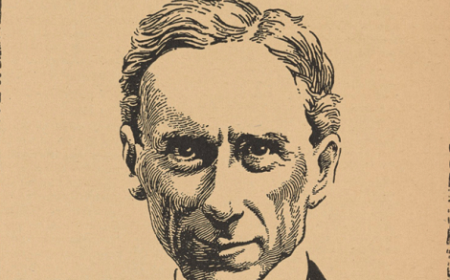
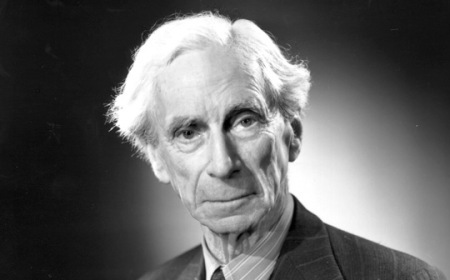
Bertrand Russell saw the history of civilization as being shaped by an unfortunate oscillation between two opposing evils: tyranny and anarchy, each of which contain the seed of the other. The best course for steering clear of either one, Russell maintained, is liberalism. “The doctrine of liberalism is an attempt to escape from this endless oscillation,” writes […]
Two centuries before Einstein, Hume recognised that universal time, independent of an observer’s viewpoint, doesn’t exist In 1915, Albert Einstein wrote a letter to the philosopher and physicist Moritz Schlick, who had recently composed an article on the theory of relativity. Einstein praised it: ‘From the philosophical perspective, nothing nearly as clear seems to have […]
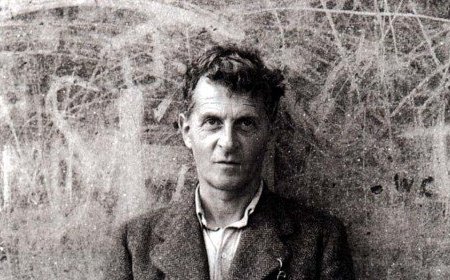
“I am not a religious man,’ the philosopher Ludwig Wittgenstein once said to a friend, ‘but I cannot help seeing every problem from a religious point of view.’ These problems that he claims to see from a religious point of view tend to be technical matters of logic and language. Wittgenstein trained as an engineer […]
Philosophers have often ruminated on the aesthetics of photography. Roland Barthes’ Camera Lucida begins with a poignant memorialization of his mother, as remembered through her photograph. Pierre Bourdieu’s Photography: A Middle-Brow Art wondered why and how the medium became so widespread that “there are few households, at least in towns, which do not possess a camera.” And […]
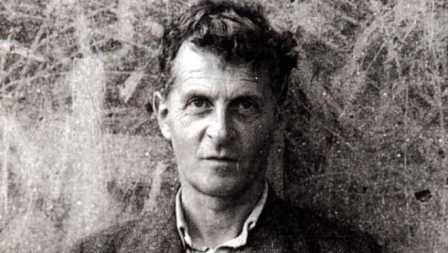
[vsw id=”pQ33gAyhg2c” source=”youtube” width=”465″ height=”384″ autoplay=”no”] In the recorded history of philosophy, there may be no sharper a mind than Ludwig Wittgenstein. A bête noire, enfant terrible, and all other such phrases used to describe affronts to order and decorum, Wittgenstein also represented an anarchic force that disturbed the staid discipline. His teacher Bertrand Russell recognized the existential […]
The Psychedelic Influence on Philosophy MMXVI Philosophy itself often arrives as a mind-altering experience, a new mode of perception unto our cosmos, at times so radical as to be hazardous. Thus can philosophy be seen as a psychoactive substance—yet the place of psychoactive substances in philosophy is not apparent. In this mildly chronological overview we […]
“There are forces making for happiness, and forces making for misery. We do not know which will prevail, but to act wisely we must be aware of both.” Bertrand Russell (May 18, 1872–February 2, 1970) is one of humanity’s most grounding yet elevating thinkers, his writing at once lucid and luminous. There is something almost […]
Ludwig Wittgenstein was born in Vienna, Austria in 1889. As a young man he studied engineering, but his mathematical work in this area led him to developing an interest in the philosophy of mathematics and then philosophy in general. Wittgenstein read and admired the philosopher Bertrand Russell’s book, The Principles of Mathematics. In 1911, he […]