
“A Serbian Film” by Srđan Spasojević: An Analysis of Transgression and Postmodern Ethics. Toward Understanding the Film as a Mirror of the Collective Unconscious.

“People don’t want the truth. They want something they can’t look away from.” Vukmir
• Why return to analyzing A Serbian Film sixteen years after its release? Precisely because time has not diminished but rather deepened its significance. Today, perhaps more clearly than ever before, it is evident that this extremely dark and brutally explicit work is not merely a provocation for the sake of shock, but an allegorical portrayal of how the state, the system, and concentrated power systematically “rape” their own people. At a moment when the world is undergoing profound political and social ruptures, and changes at the head of the world’s most powerful state—the United States of America—are reshaping global power relations, A Serbian Film imposes itself not as a relic of the past, but as a disturbingly timely warning that we refuse to heed.
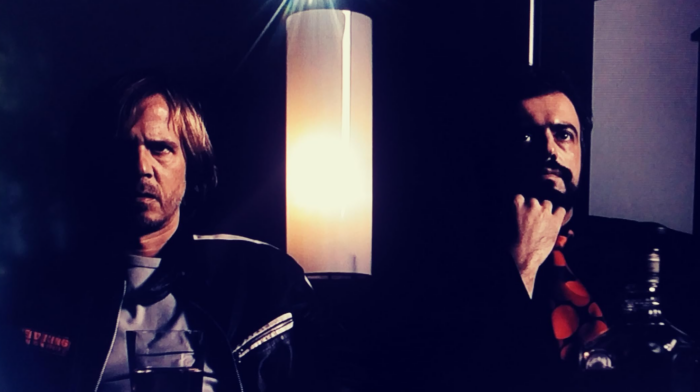
The film A Serbian Film (2010), directed by Srđan Spasojević, provoked controversy almost immediately upon its release. Its explicit themes and visual extremism elicited polarized reactions, ranging from condemnation and censorship to interpretive fascination within the frameworks of film theory and media philosophy. From a philosophical perspective, this film is not merely a product of shock culture, but a space where the limits of ethics, subjective experience, and cultural memory are tested.
From the standpoint of Heidegger’s ontology of art, the film functions as an open space for the unconcealment of truth (aletheia). It does not merely tell the story of the protagonist Miloš and his explicit degradation; rather, it unleashes the truth concerning human destructiveness and collective trauma. As Heidegger claims: “Art is the space in which truth comes into being,” Spasojević poses an existential question—what does it mean to be human in a society that is historically traumatized and morally compromised?
The film is also a critique of the postmodern consensus surrounding the sensationalization and commodification of violence. Jean Baudrillard might interpret A Serbian Film as a hyperreal simulation of extreme horror, where the boundary between fiction and reality becomes fluid: “The simulacrum does not hide the truth; it is the truth that does not exist.” In this context, the controversy is not merely a reaction from the audience but a confirmation of the film’s philosophical function—the destabilization of established norms and ethical presuppositions.
Transgression as a Philosophical Phenomenon
One of the central characteristics of Spasojević’s work is transgression—the crossing of boundaries of morality, artistic expression, and socially acceptable behavior. Philosophers such as Georges Bataille interpreted transgression as a necessary element of human existence: “Transgression reveals what is hidden and allows passage through the taboo.” In A Serbian Film, the scene of incestuous violence and sexual extremism is not merely a shock element; it functions as an experiment in the theory of moral relativism. The film poses the question: how far can a human being go in exploring their freedom, and how much can society bear the truth about that freedom?
In the context of the ethics of responsibility (Hans Jonas), the film’s extreme content provokes reflection on the limits of artistic freedom: does the artist bear responsibility toward the audience and society? Jonas would ask: if the consequences of an artwork can be destructive, is freedom of expression absolute or conditioned by ethical gravity? Spasojević, fully aware of this dilemma, deliberately provokes, thereby turning the film into a philosophical experiment in comprehending the boundaries between the moral and the immoral.
Transgression in this work also possesses an ontological dimension. Miloš, as the protagonist, becomes a metaphor for human being confronted with absurdity and violence. He is, in Bataille’s sense, a “subject of excess,” through whose body and fate extreme reality manifests itself. His transformation and degradation are not merely narrative elements; they constitute an ontological test of the limits of human experience and the revelation of truth through extreme experience.
Trauma of Collective Memory
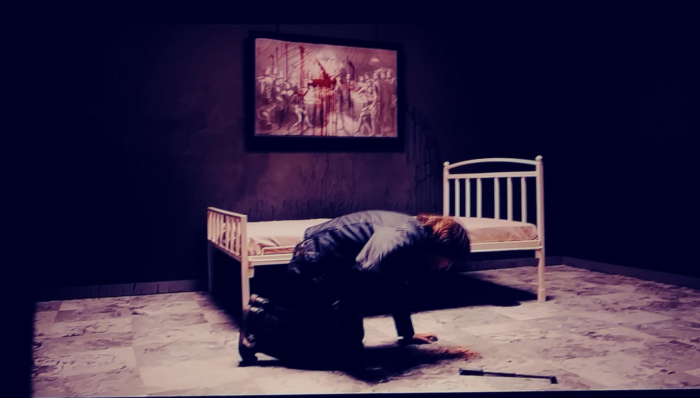
Historical-Philosophical Context A Serbian Film cannot be understood outside the context of the collective trauma that shapes contemporary Serbian society. Through its extreme visual language and grotesque situations, the film reflects historical wounds—wars, political repressions, and socio-economic crises. Here, concepts of colonial and postcolonial trauma are activated, albeit within a specific Balkan framework, where historical suffering is internalized and manifested through artistic work.
From a philosophical standpoint, the film functions as a medium for processing collective trauma, which can be interpreted through Maurice Halbwachs’ theory of collective memory: “Memory is socially structured; what the collective remembers differs from individual memory.” Spasojević employs extreme, almost grotesque visual symbols to transpose inner and collective sorrow and guilt into a form that provokes uncertainty and reflection in the audience.
Linking this analysis to Freud’s theory of deferred trauma (Nachträglichkeit), the film can be understood as a reactivation of unconscious social experiences through a shocking media form. The extreme violence and sexual degradation in the film symbolize the mechanism of trauma sublimation, where the artwork becomes a site for processing repressed historical events. Miloš, the protagonist, becomes a symbol of all citizens who have survived collective historical devastation—but through distortion, grotesqueness, and hyperreality.
Postmodern Horror and the Philosophy of Simulation
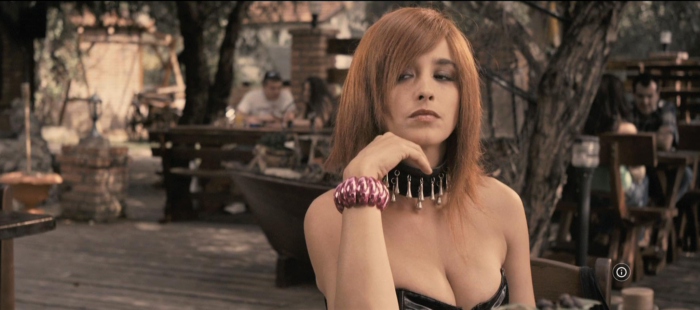
A Serbian Film is also an expression of postmodern horror, where the boundaries between the real and the fictional are erased. Jean Baudrillard’s philosophy of simulation finds full application here: the film does not merely depict extreme violence but transforms it into a simulacrum, a hyperreal version of horror that functions as a mirror of contemporary society. Baudrillard asserts: “In the hyperreal, the boundary between simulation and reality disappears, and what remains is the simulation itself.” Spasojević uses this principle to transform shock into philosophical reflection—the viewers are not passive witnesses but participants in an ontological experiment in understanding extreme human experience.
In postmodern horror, shock is not the ultimate goal; it is an instrument of philosophical questioning. Through intense visual hyperbole, the film provokes questions about the nature of freedom, morality, and existential absurdity. Susan Sontag, in Regarding the Pain of Others, noted that: “Looking at the pain of others is always a political and moral experience.” Spasojević, through media extremity, places the audience in the position of an ethical observer, forcing reflection on their own moral boundaries.
The postmodern aspect is also evident in the fragmentation of narrative and the aesthetic deconstruction of traditional horror. The film does not adhere to conventional stories of “good and evil”; instead, it deconstructs classical narrative forms, leaving the audience in a space of philosophical uncertainty where ethics, identity, and historical memory become fluid and interactive.
Ethics and Aesthetics of the Extreme
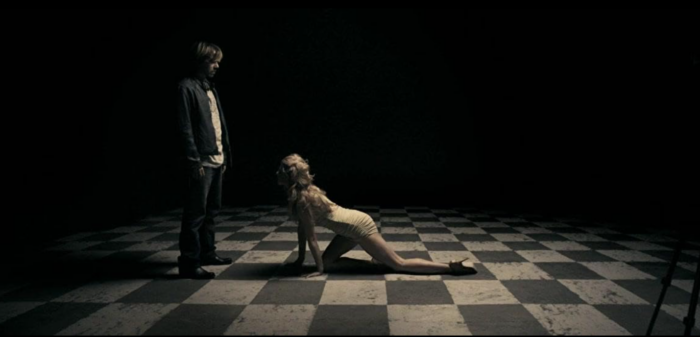
Moral Paradoxes of the Film A Serbian Film poses a fundamental philosophical question: where does artistic freedom end and moral responsibility begin? Spasojević uses extreme visual content to test the limits of ethics, exploring the space between artistic provocation and social harm. Hans-Georg Gadamer, in Truth and Method, emphasizes: “Art reveals truth through aesthetic experience, but the truth of art need not be moral.” In this context, the film functions as an experiment in moral epistemology—the audience is not merely a witness but an active observer of their own limits of tolerance and empathy.
The extreme violence in the film oscillates between shock and philosophical reflection, creating a moral paradox: how is it possible for artistic expression to evoke both fascination and revulsion simultaneously? Bataille’s theory of excess provides a framework for understanding this dynamic: transgression does not merely destroy norms; it simultaneously exposes and problematizes them. Miloš’s degradation in the film is not sensationalism for its own sake—it is an aesthetic and ethical tool that compels the audience to confront their own prejudices and repressed moral fears.
On the other hand, the aesthetics of the extreme functions as a critical medium of post-tragic reflection. The film employs grotesqueness, pornography, and violence to reveal latent social traumas and moral anomalies. Emmanuel Levinas might interpret this phenomenon through the ethics of the face: the extreme experience of the Other (in this case, the protagonist’s or victim’s body) imposes an obligation of ethical reflection: “The face of the Other always calls us to responsibility.” Spasojević, though controversial, constructs a narrative in which the audience is not passive—it must respond to the ethical call, even if only through a sense of moral discomfort.
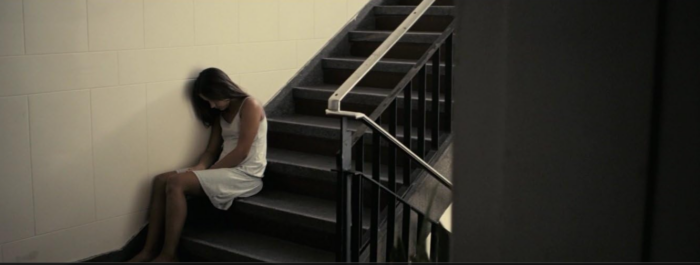
The Film as a Mirror of Post-Traumatic Society and Individual Experience A Serbian Film functions as a post-traumatic mirror
it reflects collective and individual suffering, transforming historical and social violence into a media experiment. Miloš’s degradation and extreme situations are not merely individual tragedy—they are a symbiosis of collective and personal trauma, transformed through artistic language. Slavoj Žižek would describe this dynamic through the dialectical principle: the film reveals hidden conflicts in society that the audience simultaneously recognizes and represses. It functions as a social mirror reflecting the latent horror and discomfort of contemporary society, especially in the post-conflict Balkan context.
Through the philosophical lens of existentialism, the film explores the absurd and ontological horror of the human condition. Miloš is a metaphor for modern man confronted with inevitable violence, moral degradation, and existential helplessness. Albert Camus, in The Myth of Sisyphus, applies the principle of the absurd: faced with meaninglessness, man can choose between passivity or conscious confrontation. Miloš’s passivity and inability to control his own fate in the film represent an ontological test—the absurd in its purest form.
The film also operates through psychological and social projection: its extreme content activates the collective unconscious (Jung), where symbols of degradation and violence serve as catalysts for introspective reflection. The audience, confronted with hyperreal distortion of reality, enters an interactive process of philosophical interpretation: re-examining morality, social norms, and their own capacity for empathy. This structure makes A Serbian Film more than horror; it transforms it into a philosophical medium where every scene is an experiment in ethics, aesthetics, and ontology.
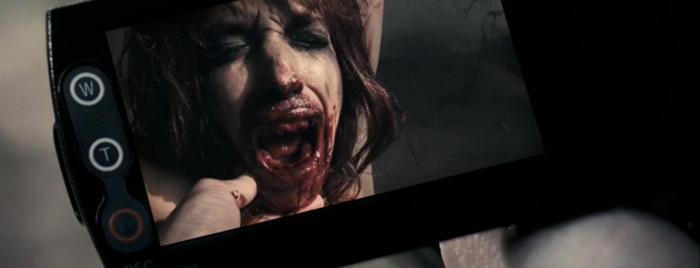
Philosophical Reception and Cultural Controversy
From the moment of its release, A Serbian Film provoked intense reactions in domestic and international public spheres. The film was banned, censored, and the subject of moral debates, which only confirms its role in postmodern philosophy of cultural shock. Rather than being a passive aesthetic artifact, the work functions as a provocative space for social and philosophical reflection, raising the question: how ready is society to confront its own dark potentials?
From a philosophical viewpoint, the film’s reception illustrates the dialectic between the aesthetic and the ethical. Kant, in the Critique of Judgment, stresses that aesthetic experience involves autonomy of judgment, but in the context of extreme content, the audience’s autonomy confronts moral challenges: the viewer is forced to re-examine their own ethical compass. The film thus becomes a laboratory in which the limits of tolerance, empathy, and collective responsibility are tested.
The controversy surrounding the film also activates discourses of social symbolism and media theory. Rather than merely shocking, Spasojević uses provocation as a means of critical commentary on social traumas, historical conflicts, and cultural taboos. Slavoj Žižek would call this dynamic an ideological deconstruction, where the film exposes hidden structures of power, repression, and moral compromises through hyperreal visual language. The audience confronts its own prejudices, making the film not only a medium of horror but also an instrument of philosophical introspective reflection.
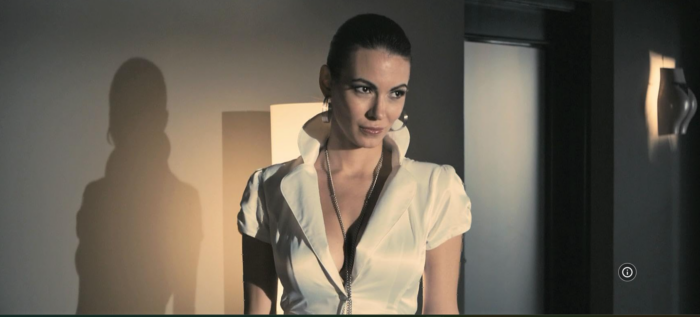
Conclusion
Art, Trauma, and Moral Reflection A Serbian Film by Srđan Spasojević is not simply a horror film or a sensationalist provocative product; it is a philosophical experiment in which ethics, aesthetics, trauma, and postmodern horror intertwine. Through extreme narration and visual transgression, the film explores the limits of human freedom, moral choice, and collective memory. Heidegger’s idea of art as the unconcealment of truth (aletheia) here receives radical application—the truth is not pleasant but shocking, grotesque, and challenging.
Extreme violence and sexual degradation serve as symbolic media for articulating latent traumas and moral dilemmas. The audience, confronted with this content, is compelled to re-examine their own limits of empathy and ethics, while the film simultaneously reflects collective and individual suffering. This radical aesthetic and philosophical experiment places Spasojević’s film within the framework of art that not only provokes but also educates, reflects, and destabilizes established norms.
In the end, A Serbian Film is a critical mirror of contemporary society—through grotesqueness and shock, it reveals hidden truths about human nature, collective history, and moral paradoxes. As Bataille emphasizes, transgression does not destroy the normative; it reveals what is hidden. In this light, the film becomes more than a media phenomenon—it is a philosophical reflection on what it means to be human in a world full of absurdity, trauma, and ethical dilemmas.
This essay on A Serbian Film was originally published in 2010 for E-novine; this is its revised and phenomenologically adapted version, arising from reflection on subjective experience and aesthetic perception of the cinematic world.
For P.U.L.S.E. Branko Milić, philosopher and sociologist Belgrade,
Anno Domini 2026.

“A Serbian Film”: An Analysis of Transgression and Postmodern Ethics added by Branko Milić on
View all posts by Branko Milić →
You must be logged in to post a comment Login