Late in his illuminating and useful examination of Ludwig Wittgenstein’s Tractatus Logico-Philosophicus, Benjamin Ware quotes Wittgenstein’s assessment of the Viennese house the philosopher designed and built for his sister in 1940, by many lights a modernist masterpiece that Wittgenstein himself deems “the product of a decidedly sensitive ear and good manners, an expression of great understanding […]
What makes me the same person throughout my life, and a different person from you? And what is the importance of these facts? I believe that most of us have false beliefs about our own nature, and our identity over time, and that, when we see the truth, we ought to change some of our […]
Metaphysical debates in quantum physics don’t get at ‘truth’ – they’re nothing but a form of ritual, activity and culture. I first learnt about Plato’s allegory of the cave when I was in senior high school. A mathematics and English nerd – a strange combination – I played cello and wrote short stories in my […]
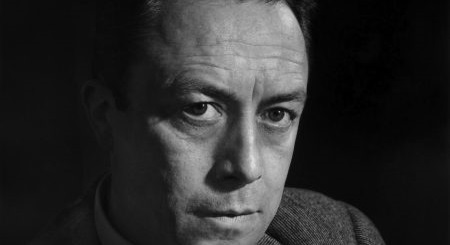
The French novelist and philosopher Albert Camus was a terrifically good-looking guy whom women fell for helplessly—the Don Draper of existentialism. This may seem a trivial thing to harp on, except that it is almost always the first thing that comes up when people who knew Camus talk about what he was like. When Elizabeth […]
Visiting Wittgenstein’s home evokes the philosopher’s serious, ascetic mind (no doubt he would disapprove its restoration) Westerners who see ancestor worship as something only other cultures do should look around: signs of its devout practice are everywhere. We have park benches in memory of those who once sat there, plaques to the famous inhabitants of […]
Bertrand Russell saw the history of civilization as being shaped by an unfortunate oscillation between two opposing evils: tyranny and anarchy, each of which contain the seed of the other. The best course for steering clear of either one, Russell maintained, is liberalism. “The doctrine of liberalism is an attempt to escape from this endless oscillation,” writes […]
Two centuries before Einstein, Hume recognised that universal time, independent of an observer’s viewpoint, doesn’t exist In 1915, Albert Einstein wrote a letter to the philosopher and physicist Moritz Schlick, who had recently composed an article on the theory of relativity. Einstein praised it: ‘From the philosophical perspective, nothing nearly as clear seems to have […]
“I am not a religious man,’ the philosopher Ludwig Wittgenstein once said to a friend, ‘but I cannot help seeing every problem from a religious point of view.’ These problems that he claims to see from a religious point of view tend to be technical matters of logic and language. Wittgenstein trained as an engineer […]